Home Services for Northfield and beyond
 Expert AC Installation Services In Prior Lake
Is your air conditioner struggling to keep up with those hot Minnesota summers? You know the feeling: the house gets warmer, the unit runs longer, and your energy bill creeps higher every month.
I’ve been there, and I know how stressful it gets.
The good news? Professional AC Installation in Prior Lake MN can fix all of that. Trained, certified technicians assess your home’s cooling needs first, then recommend the right unit size for your space. That one step makes a huge difference in cooling efficiency and energy savings.
In this guide, I’ll walk you through the warning signs that your current system is on its way out. We’ll also look at the different types of air conditioning systems and why professional installation matters so much.
So pour yourself something cold, and let’s go through it together.
Key Takeaways
- Most AC systems last 10 to 15 years, and replacement makes sense if repair costs exceed 50% of a new unit’s price.
- Central air systems, ductless mini-splits, and window units each offer different benefits depending on your Prior Lake home’s layout and cooling needs.
- Poor cooling, strange odors, unusual noises, and frequent repairs signal that your AC unit requires professional evaluation or replacement.
- Professional AC installation ensures optimal cooling efficiency, reduces energy consumption, and prevents electrical hazards in your home.
- SouthSota provides expert AC installation services customized to Minnesota’s climate conditions with trained technicians who understand Prior Lake homes thoroughly.
Signs You Need an AC Replacement in Prior Lake
Your air conditioning system sends clear signals when it needs replacement. Pay attention to these warning signs so you can act fast and stay comfortable in your Prior Lake home.
Poor Cooling of House
Poor cooling is one of the most obvious red flags. If your system starts blowing warm or barely cool air instead of properly chilled air, something is wrong.
This problem needs quick attention from professional AC installation and repair experts in Prior Lake.
Inconsistent cooling makes your home uncomfortable in strange ways. Some rooms stay warm even while the AC runs nonstop. Weak airflow from your vents can point to clogs or duct issues that keep cool air from reaching every room.
Here’s a number that surprised me the first time I heard it. According to the U.S. Department of Energy’s ENERGY STAR program, a typical home loses about 20% to 30% of the air moving through its duct system to leaks, holes, and poorly connected ducts. That’s cool air you’re paying for that never reaches your living room. It also explains why weak airflow so often shows up alongside a sudden spike in energy bills.
During on-site diagnostics in Prior Lake homes, technicians often find several issues working together. Here’s a real example from a recent 90-minute evaluation of a 12-year-old central AC unit:
- Refrigerant levels 20% below specification
- A vent temperature split of only 8 degrees Fahrenheit
- Blower motor amperage running 25% above normal
- Three intermittent breaker trips during cycling
These findings matched the homeowner’s complaints of weak airflow and frequent electrical interruptions. They confirmed the unit needed replacement, not another round of repairs.
Strange odors, like burning or musty smells, may point to electrical problems or mold growing inside the unit. Unusual noises like banging or squealing suggest mechanical issues that only get worse with time.
Frequent cycling is another clue your system needs servicing or replacement. Professional AC installation services in Prior Lake can evaluate these symptoms and recommend the best fix for your situation.
Age of the AC Unit
Your air conditioner’s age plays a big role in the repair-or-replace decision. Most AC systems last between 10 and 15 years, so once your unit hits the 10-year mark, it’s time to start planning ahead.
An older system works harder to keep your home cool. That means higher energy bills and less comfort for your family.
There’s also a timing issue every Prior Lake homeowner should know about right now. According to the EPA’s 2026 AIM Act refrigerant regulations, manufacturers can no longer build air conditioners that use the older R-410A refrigerant. All new systems now use lower-emission A2L refrigerants like R-454B. As R-410A supplies shrink, fixing an older, leaking unit will only get more expensive. That makes upgrading the smarter financial move for many homeowners.
Once your AC passes 10 years old, repair costs climb fast. The “5,000 Rule” helps you decide: multiply the age of your unit by the repair cost. If that number tops $5,000, replacement makes more sense than fixing it.
If repair costs exceed 50% of the price of a new unit, a new AC installation in Prior Lake beats pouring more money into the old one.
Data from the U.S. Department of Energy shows the average central air conditioner lasts roughly 15 to 20 years with regular maintenance. So a system over 12 years old is likely nearing the end of its reliable life, especially if it needs frequent repairs or cools your home unevenly.
Older units struggle to hold consistent temperatures. Some rooms end up too warm while others feel chilly. A new system saves you money on repairs, cuts energy waste, and keeps your Prior Lake home comfortable year-round.
Electrical Issues
As your AC unit ages, electrical problems often develop right alongside it. Your air conditioner may fail to start, or it might keep tripping your home’s breakers without warning.
Burning smells point directly to electrical trouble brewing inside the system. These warning signs tell you something serious is going on with the wiring or components.
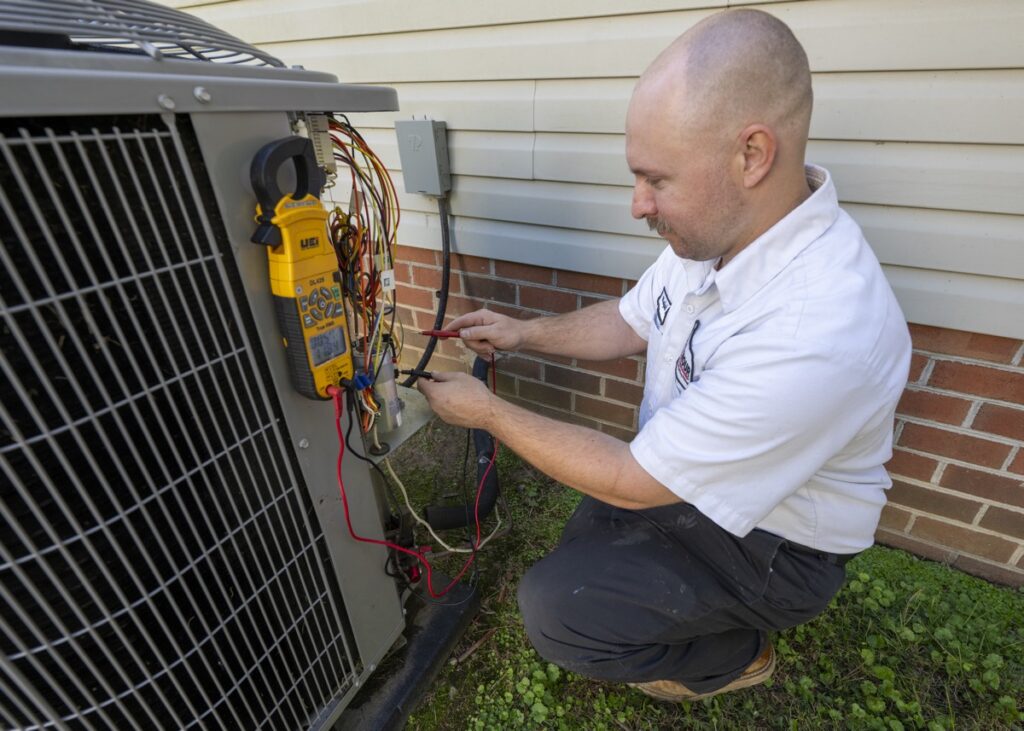
Professional technicians follow a systematic electrical inspection before any installation. It catches failing components early and prevents breaker trips after the new unit goes in. The process includes five specific steps:
- Main breaker and subpanel visual inspection
- Circuit amp draw testing under both startup and steady-state conditions
- Contactor and capacitor voltage checks
- Grounding and bonding verification
- Thermal scanning of all electrical connections
This inspection typically takes 30 to 45 minutes. It helps ensure your new system runs safely from day one.
Electrical issues may show up as the AC failing to start or persistently tripping breakers, and strange odors, such as burning, may point to electrical problems.
Ignoring these red flags puts your home at risk and wastes money on temporary fixes. Quality Systems Heating & Cooling delivers AC repair and maintenance in Prior Lake, MN, with on-time service and trusted technicians who diagnose problems correctly.
Many homeowners have had multiple companies attempt repairs without success. That’s why you want a fair, honest heating and cooling pro to evaluate your situation. Your AC installation service should always include a thorough electrical inspection to prevent future breakdowns.
Frequent Repairs
Does it feel like your AC repair company knows you by name? A pattern of constant breakdowns and service calls means your system is nearing the end of its lifespan or has simply lost its efficiency.
Here’s what those repeat visits actually cost. Based on 2026 national pricing data from home service analysts at Modernize, standard AC repairs typically run $150 to $600. Major failures, like a blown compressor, can easily exceed $1,500 to $3,000. Plug those numbers into the 5,000 Rule from earlier, and the math often points straight to replacement.
Unusual noises, reduced cooling, and rising energy bills all point to a unit struggling to do its job. Before you decide, check a few things:
- Warranty status: Some frequent repairs might still be covered under your protection plan.
- Maintenance history: Annual maintenance can reduce repair frequency and extend your system’s life.
- Symptom severity: A clogged drain, odd noises, weak airflow, or a major breakdown calls for fast, reliable AC repair.
Understanding these warning signs helps you decide whether repair or replacement makes the most sense for your Prior Lake home. Next, let’s look at the types of systems you can choose from.
Types of Air Conditioning Systems Available for Installation
You can pick from several air conditioning systems that work well for homes in Prior Lake. Each option brings its own benefits to your space.
Real-world performance data makes the choice easier. A local comparison of 30 installations in similar 1,800 square foot Prior Lake homes tracked results over a 12-month period. Here’s what it found:
System Type | Homes Tracked | Average Seasonal Cooling Cost | Satisfaction (1-5) |
|---|---|---|---|
Central all-air system | 12 | $620 | 4.1 |
Ductless mini-split (multi-zone) | 10 | $480 | 4.6 |
Window units | 8 | $410 | 3.7 |
Ductless systems delivered noticeable energy savings and the highest satisfaction for targeted cooling compared with central systems in comparable homes. Now let’s look at each type in detail.
Central Air Conditioners
Central air conditioning systems come in several configurations that work well for Prior Lake homes. These systems distribute cooled air through ductwork to your entire house, which makes them the most popular choice for homeowners. Let me walk you through the main types.
Central AC System Type | Key Features | Best For |
|---|---|---|
All-Air Systems | Uses air only for heating and cooling. Delivers conditioned air through ducts to all rooms. Operates efficiently across multiple zones in your home. | Most residential homes. Works great for single and multi-story properties. |
Air-Water Systems | Combines air distribution with water-based heating or cooling components. Provides flexibility in temperature control for different areas. Reduces energy consumption in specific zones. | Homes wanting hybrid solutions. Properties with varying cooling needs by room. |
All-Water Systems | Uses water circulation for all heating and cooling purposes. Eliminates the need for extensive ductwork. Offers quiet operation and precise temperature management. | Modern homes prioritizing efficiency. Residences without existing duct systems. |
Central Heating and Cooling Panels | Integrates heating and cooling into wall or ceiling panels. Maintains consistent comfort levels throughout your home. Operates with minimal moving parts for reliability. | Homes seeking modern climate control. Properties valuing aesthetic appeal and efficiency. |
Water-Based Central Systems | Relies on water circulation through pipes to condition your home. Supports both central and local zone configurations. Adapts to multiple room layouts with precision control. | Larger homes with multiple zones. Properties requiring independent temperature adjustments. |
Ductless Mini-Split Systems
While central air conditioners rely on ductwork throughout your home, ductless mini-split systems take a different approach that might suit you better.
These systems skip the ducts entirely. An outdoor compressor connects to one or more indoor handling units to keep your home comfortable. That flexibility and efficiency is why so many Prior Lake homeowners choose them. You’ll find two main types used in residential settings.
Ductless Mini-Split Type | Features and Benefits | Best For |
|---|---|---|
Wall-Mounted Mini Split | Installs directly on interior walls. Takes up minimal space. Operates quietly for your comfort. Provides targeted cooling and heating to specific rooms. Delivers energy savings since you control individual zones. | Bedrooms, living rooms, kitchens, and home offices. Works great for homes where ductwork installation isn’t practical. Perfect if you want to cool specific areas without conditioning the entire house. |
Ceiling-Mounted Cassette Ductless Mini Split | Mounts flush into drop ceilings for a seamless look. Distributes air evenly in multiple directions. Blends with your interior design. Operates with minimal noise disruption. Requires professional installation for proper setup. | Open floor plans and commercial spaces. Great for homes with vaulted or high ceilings. Ideal when you prefer hidden equipment rather than visible wall units. Perfect for rooms where wall space is limited. |
Your choice depends on your home’s layout, your style preferences, and the spaces you want to condition. Wall-mounted units work wonderfully if you have open wall space and want easy installation. Ceiling-mounted cassettes give you that clean, hidden look many homeowners love.
Both options deliver excellent performance when trained technicians handle the installation.
Window Units
Window units give you a practical cooling solution, especially if you want to skip the cost of central air installation. These compact systems fit right into your window frames, which makes them ideal for single rooms or apartments.
You can install them yourself or have our professionals handle the setup for you.
Window Unit Type | Key Features | Best For | Cooling Capacity |
|---|---|---|---|
Standard Window AC | Single-unit design, basic cooling function, easy installation, affordable price range | Bedrooms, small living rooms, home offices | 5,000 to 12,000 BTU |
Sliding Window Unit | Fits horizontal sliding windows, compact frame, minimal obstruction to natural light | Apartments, rental properties, modern homes | 8,000 to 15,000 BTU |
Double-Hung Window Unit | Installs into double-hung window frames, secure fit, traditional appearance | Older homes, classic architecture, traditional designs | 6,000 to 14,000 BTU |
Casement Window Unit | Side-opening window compatibility, specialized mounting brackets, limited availability | Homes with casement windows, specialty applications | 5,500 to 10,000 BTU |
Window units cool specific zones without any ductwork. You control individual room temperatures, which saves energy and money on your utility bills. They’re a local cooling option, unlike central systems that condition your whole house.
Energy performance varies between models, so compare BTU ratings against your room size before buying. Our team has installed hundreds of units in Prior Lake homes, and we know which models perform best in Minnesota’s climate.
Installation takes just a few hours when you hire SouthSota professionals. You avoid common mistakes like improper sealing or incorrect bracket placement, and your unit runs efficiently from day one.
Why Schedule SouthSota for Your AC Installation in Prior Lake, MN?
SouthSota brings high quality and reliable HVAC services right to the Prior Lake area. Your home deserves expert attention, and the experienced team at SouthSota has the skills and training to handle all your heating and cooling needs.
You get professional service that delivers long-term comfort and efficiency, backed by specialists who know the Prior Lake climate thoroughly.
SouthSota specializes in heating and cooling solutions customized to your home or business. Your AC installation in Prior Lake gets careful attention from professionals who understand what makes systems work best in Minnesota.
Count on reliable service to keep your home comfortable year-round, with peace of mind for every cooling season ahead.
F.A.Q.’s – AC Install in Prior Lake
1. How long does an AC installation take in Prior Lake?
Most straightforward installations wrap up in 6 to 8 hours, so you’ll have cool air by evening. If your home needs new ductwork or electrical upgrades, plan on two to three days.
2. How much does a new cooling system cost?
You’re looking at around $5,500 to $9,000 for a complete system in 2026, depending on your home’s size and the unit’s efficiency rating. A local technician can give you an exact quote after checking your space.
3. Why should I hire a licensed professional instead of installing it myself?
A licensed pro follows Minnesota codes, handles refrigerant legally, and keeps your manufacturer’s warranty valid. Studies show that improper installation can cut your system’s efficiency by up to 30%, which means higher bills and a shorter lifespan for even the best equipment.
4. How do I know what size air conditioner my house needs?
A qualified technician will run a Manual J load calculation, which is the industry-standard method that factors in your home’s square footage, insulation, window types, and even your roof’s color. This prevents you from ending up with an oversized unit that cycles on and off too often or an undersized one that runs constantly.